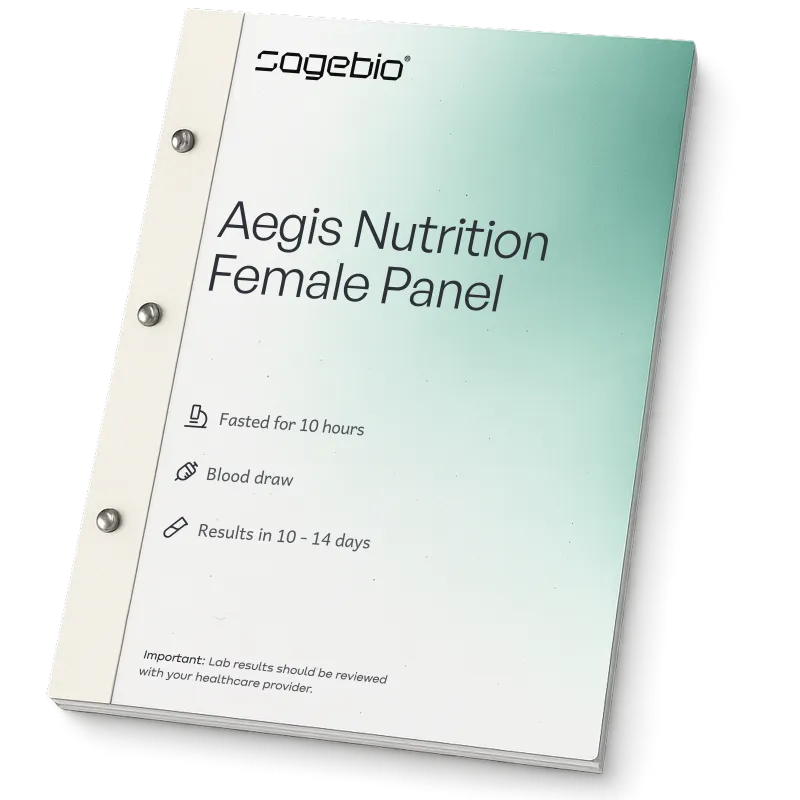
Aegis Nutrition Female Panel
$299.00
Available strictly for David DeMesquita + friends, this custom panel is tailored by David for female athletes. Use as a baseline before beginning your health journey, or as a way to monitor important biomarkers during it.
What markers are included?
- Hormones: Testosterone free and total (LCMS), Estradiol total, Cortisol, DHEA Sulfate, Progesterone, Prolactin, IGF-1, Sex Hormone Binding Globulin (SHBG), FSH, LH
- Metabolism: Comprehensive Metabolic Panel (14 markers), Uric Acid, GGT (Gamma-Glutamyl Transferase), Creatine Kinase
- Thyroid: TSH, T4 Free, T3 Free
- Diabetes Risk: HbA1c
- Nutrition and Anemia: Vitamin D, Complete Blood Cell report, Ferritin, Iron, TIBC
- Cardiac Health: Lipid Panel, C-Reactive Protein, Homocysteine
What do these tests mean?
Hormones
- Testosterone (free and total) (LC/MS): Vital for muscle mass, bone density, and sex drive — It makes effort feel good. This testing method utilizes Liquid Chromatography + Mass Spectroscopy (LCMS) to give a far more accurate result than traditional assays that most companies use. Free testosterone provides the most accurate estimate of how much testosterone is actually available.
- Estradiol (total): Important for reproductive and sexual health. It also helps protect and build bone mass.
- Progesterone: Crucial for menstrual cycle regulation and pregnancy. It can also convert to important progestogenic neurosteroid hormones (allopregnanolone and isoallopregnanolone), which aid with relaxation and sleep via GABA and other receptors.
- Cortisol: Although it is known as the stress hormone, a better description is “daytime regulation and energy hormone”. It has many functions including regulating blood sugar, metabolism, inflammation, and it can also limit bone and muscle growth.
- DHEA Sulfate: Helps produce other hormones, including testosterone and estrogen.
- Prolactin: Stimulates milk production. Dopamine levels can decrease prolactin. High prolactin can decrease testosterone and estradiol. Prolactin spikes can make you feel sluggish.
- IGF-1 (Insulin-like Growth Factor 1): Plays a role in growth and development.
- Sex Hormone Binding Globulin (SHBG): SHBG (Sex Hormone Binding Globulin) is a protein that carries sex hormones like testosterone and estrogen in the blood and helps to regulate their tissue availability and metabolism.
- FSH & LH: Pituitary hormones that regulate hormones that help control puberty, fertility, and sex hormone production. FSH stimulates egg or sperm production, while LH triggers ovulation and testosterone release.
Metabolism
- Comprehensive Metabolic Panel: Includes 14 biomarkers to test kidney and liver function, blood sugar levels, and electrolyte balance.
- Uric Acid: High levels may lead to gout or kidney stones.
- GGT (Gamma-Glutamyl Transferase): GGT (Gamma-glutamyl transferase) is a liver enzyme. High levels may mean liver or bile duct problems.
- Creatine Kinase: An enzyme that indicates muscle breakdown which may be a normal response to exercise, but is sometimes used to identify neuromuscular conditions or serious muscle injury.
Thyroid
- TSH (Thyroid-Stimulating Hormone): Regulates thyroid function. This is the signal from the brain to the thyroid gland.
- Thyroxine (T4) Free, Direct: The main hormone produced by the thyroid gland, precursor to T3.
- Triiodothyronine (T3), Free: The active form of thyroid hormone that helps maintain metabolism and energy levels among many other functions.
Diabetes Risk
- Hb A1c: Estimates average blood sugar levels over the past 2-3 months.
Nutrition and Anemia
- Vitamin D: A steroid hormone that regulates calcium (essential for bone health), supports immune function, and is even a weak myostatin inhibitor.
- Complete Blood Cell (CBC) report: This test counts the different types of cells in your blood, like red blood cells (carry oxygen), white blood cells (fight infection), and platelets (help stop bleeding).
- Ferritin: Shows how much iron is stored in your body. Low levels may mean you’re low on iron.
- Iron Serum, TIBC (Total Iron-Binding Capacity): Evaluates circulating iron and the blood’s capacity to bind and transport it — useful for assessing iron deficiency or overload.
Cardiac Health
- Lipid panel: Provides information about lipoproteins and triglycerides which are commonly known as “cholesterol.”
- C-Reactive Protein (CRP): A nonspecific marker of inflammation that can rise with poor diet quality, oxidative stress, or some chronic medical conditions. Useful for assessing how health conditions, nutrition, and lifestyle factors impact overall inflammatory status.
- Homocysteine: High levels are a risk factors for many pathologies such as heart disease and cognitive decline, and can be indicative of poor methylation.
Who should take these tests?
This panel is ideal for David DeMesquita and his colleagues.