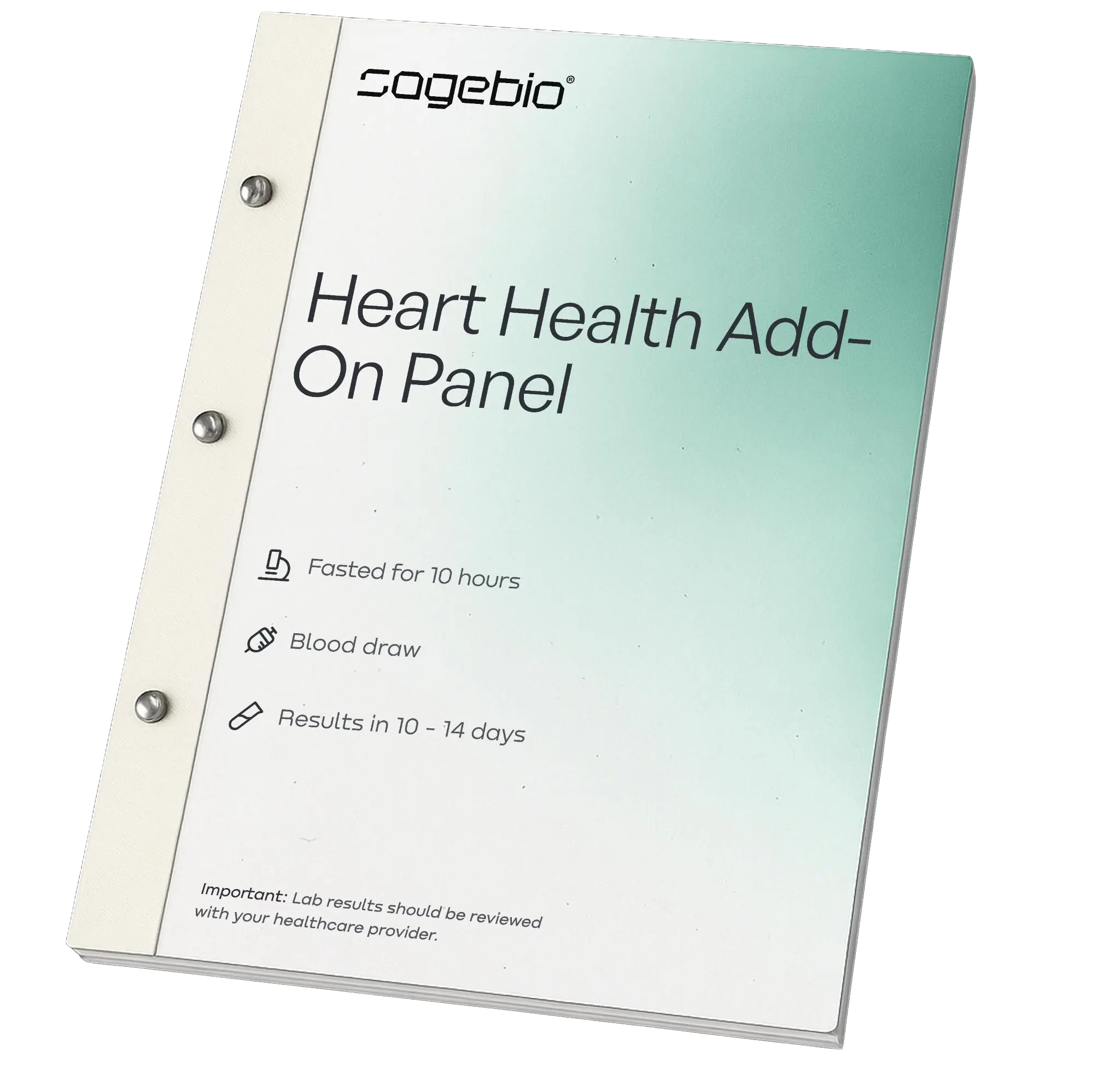
This panel helps provide a comprehensive picture of your cardiovascular health and can guide your healthcare provider in assessing and managing your risk for heart disease.
What markers are included?
Cardiac Health: NMR Lipid Panel, Oxidized LDL, Homocysteine, lipoprotein (a), Apolipoprotein A + B + Ratio
What do these tests mean?
Cardiac Health
NMR Lipid panel: Provides detailed information about lipoproteins and triglycerides which are commonly known as “cholesterol.” This breakdown by NMR gives details on particle counts as well as sizes.
Oxidized LDL: Measures the level of oxidized low-density lipoprotein (LDL) in the blood. Oxidized LDL is more likely to cause inflammation and plaque buildup in the arteries, increasing the risk of atherosclerosis and cardiovascular diseases.
Homocysteine: High levels are a risk factors for many pathologies such as heart disease and cognitive decline, and can be indicative of poor methylation.
Lipoprotein (a): A genetically influenced lipoprotein that carries cholesterol in the blood. Elevated levels may increase the risk of heart disease, even when standard cholesterol levels are normal.
Apolipoproteins A1+B+Ratio: This test measures two important proteins in your blood. Apolipoprotein A1 (ApoA1) is the main protein in HDL, or “good cholesterol”. Apolipoprotein B (ApoB) is the main protein in LDL, or “bad cholesterol”. The ApoB/ApoA1 ratio compares the amount of “bad” to “good” particles. A higher ratio may mean a higher risk for heart disease.
Who should take these tests?
This panel is ideal for individuals looking to gain additional insight into cardiovascular function and risk.